Market outlook
Stable Outlook 5/10
Modern Japanese Art Rares tend to settle after release unless the Pokémon, artist, or set becomes a major chase. Rookidee has broad appeal but not enough character-driven scarcity to imply sustained strong appreciation.[3][8][11]
Next months. Likely to remain in a narrow, low-to-moderate price range with minor fluctuations based on grading demand and set-completion buying.
Long term. Over 1-3 years, the card is more likely to hold value than to surge sharply, with modest upside for high-grade copies and little pressure on raw copies unless the Pokémon or artist gains renewed attention.
History
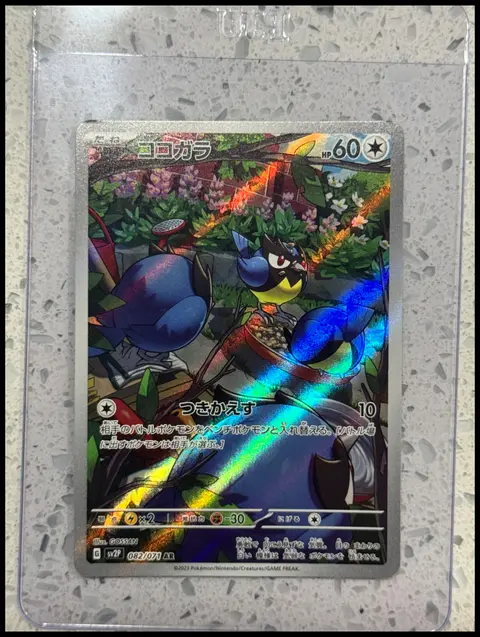
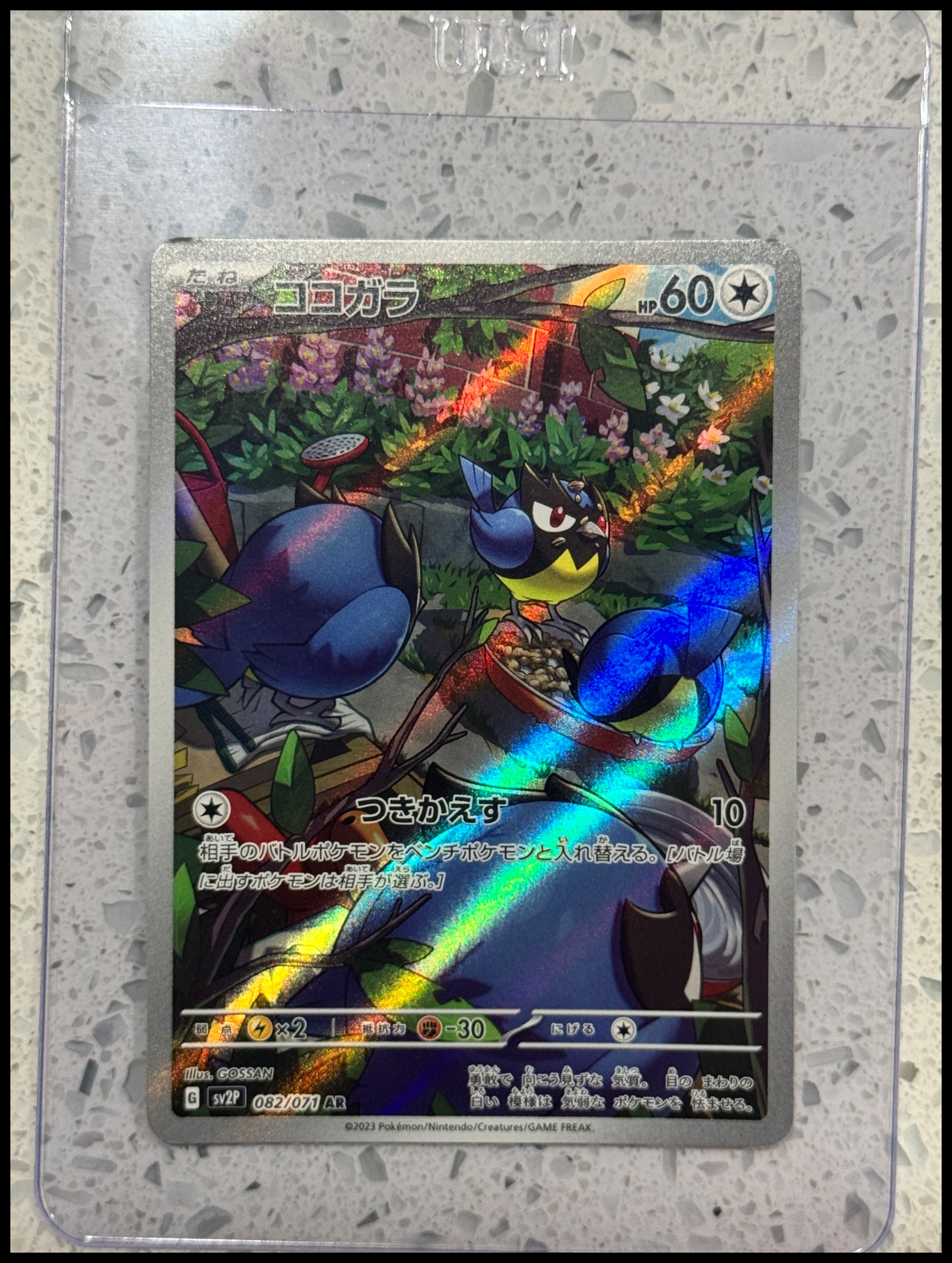
Rookidee is a Galar-region Pokémon introduced in the mainline video games as a small flying-type bird; in Japanese it is ココガラ (Kokogara). It is the Basic form that evolves into Corvisquire and then Corviknight, and its Pokédex identity makes it a recognizable early-route Pokémon with strong linkage to the Galar theme of the Sword & Shield era.[19]
This Rookidee Art Rare was first released in Japan in the Snow Hazard expansion (SV2P) on April 14, 2023.[2][3][10] It was released as card 082/071, which places it in the secret-range Art Rare slot of the set rather than the main numbered card list.[10]
- Snow Hazard contains 12 Art Rare cards, and Rookidee is one of them.[3][10]
- Despite being numbered 082/071, the card is an Art Rare and sits in the set's secret-style rarity band.[10]
- Market listings and grading databases show substantial graded/graded population activity, indicating the card is not especially scarce in absolute supply, even if it is desirable for artwork collectors.[1][8][11]
Rarity and print run
- Tier
- Secret Rare
- Print run
- High
- First printed in
- Snow Hazard (SV2P)
- Demand
- Medium
- Supply
- High
- Art Rare slot within a Japanese set
- Card number 082/071 places it in the secret-style numbering band
- Collector interest comes more from artwork than character popularity
Collector notes
Condition. Check centering, corner wear, edge whitening, and surface scuffs on the holo/art finish; Japanese Art Rares can also show visible print lines, small factory marks, and handling wear from loose pack pulls. Full-art cards are especially sensitive to front-surface scratches and edge chipping.[1][4]
Storage. Use a penny sleeve plus a rigid top loader or graded-card holder, keep it away from sunlight and humidity, and avoid repeated sliding in and out of sleeves because the full-art holo surface can scratch easily. For raw copies, a snug inner sleeve and semi-rigid protection are preferable for long-term storage.
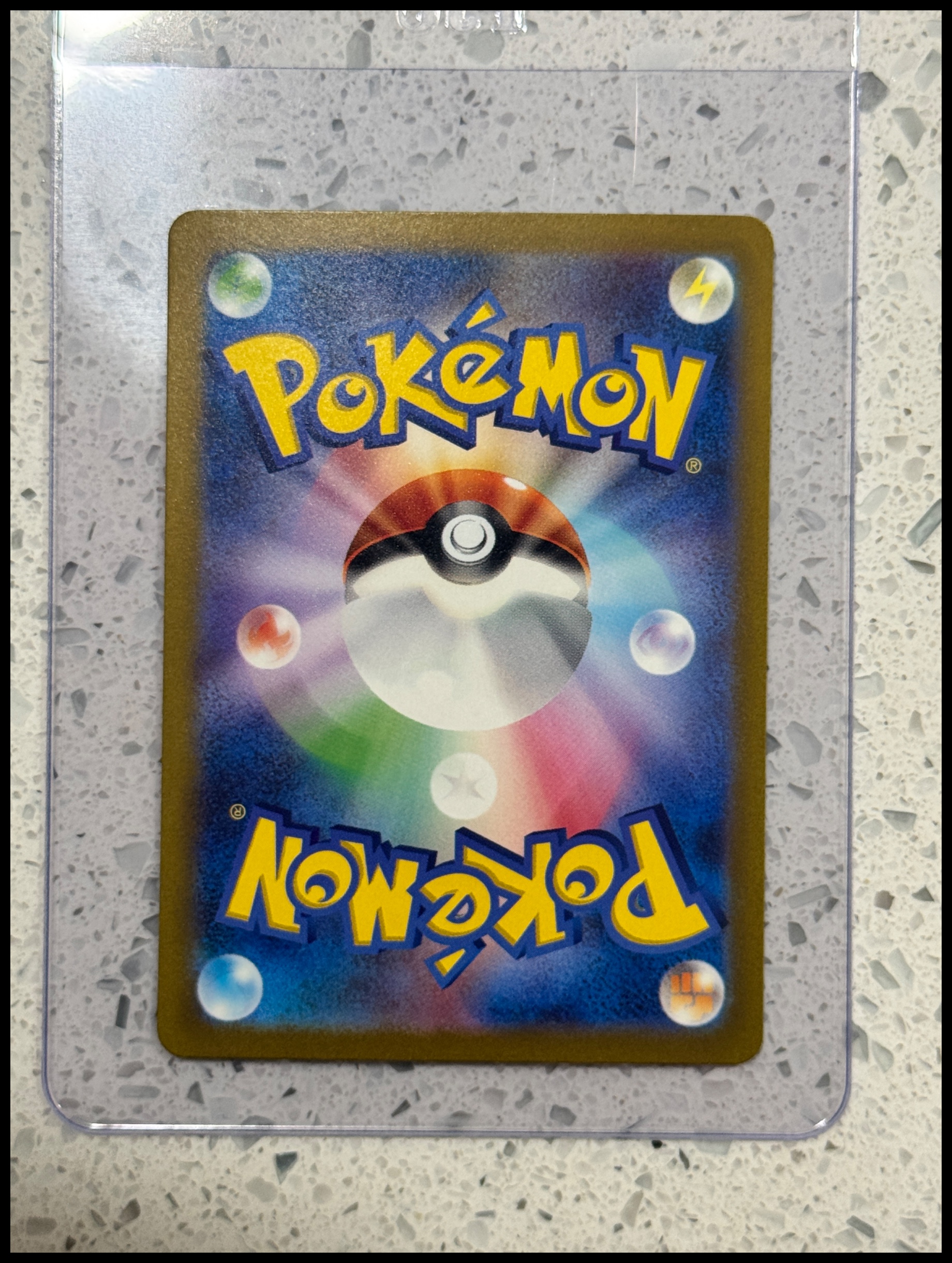
Authenticity. Verify the Japanese card stock, crisp print quality, and correct numbering 082/071; authentic copies should have clean typography, consistent holo pattern, and the expected Japanese back/stock feel. Counterfeit checks should include light-blocking stock, rosette pattern under magnification, and overall print sharpness; for higher-value copies, third-party grading is the most reliable authentication route.[15]
Sources: thehobbynetwork.com, pricecharting.com, jpycollectibles.com, nmdcollectables.co.uk, ebay.com