Market outlook
Rising Outlook 7/10
Demand for cute starter Pokémon, strong art-driven collecting trends, and the chase-card status of Illustration Rares usually support gradual appreciation after initial release volatility. If the card remains difficult to pull and grades well, gem-mint copies should retain a premium.
Next months. Expect volatile pricing in the first 3-6 months, with early hype spikes followed by a possible settle-down period as supply enters the market.
Long term. Over 1-3 years, the card should trend upward if it remains a favored Piplup collectible and if supply does not become excessive; gem-mint copies should outperform raw copies.
History
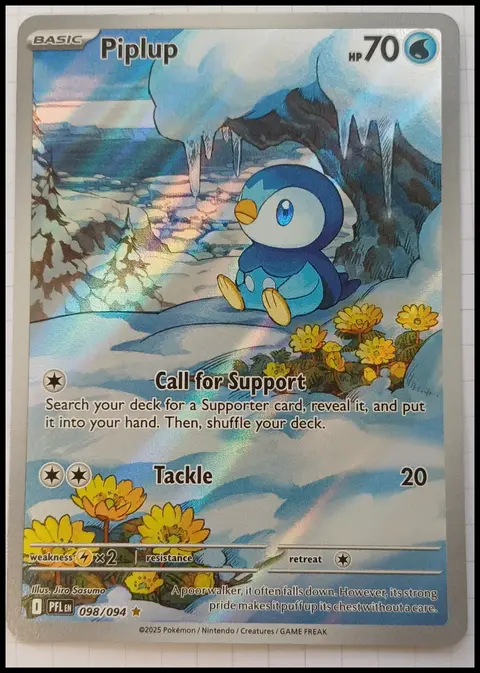
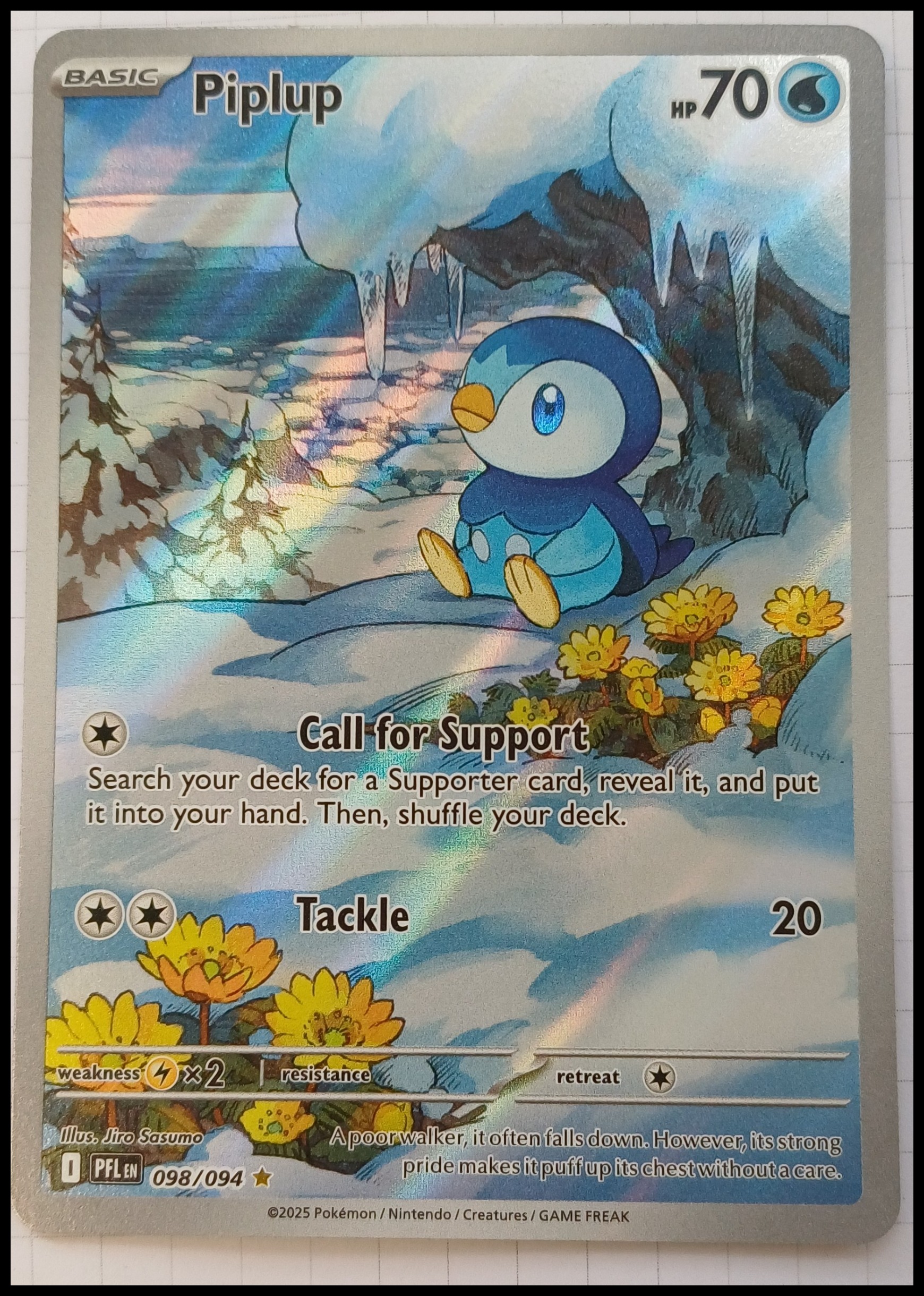
Piplup is a Water-type Pokémon introduced in Generation IV (Sinnoh region) and first appearing in Pokémon Diamond and Pearl in 2006. It is one of the Sinnoh starter Pokémon and is widely recognized as the penguin-inspired starter that evolves into Prinplup and Empoleon. In the TCG, Piplup is a perennial fan favorite because it combines starter Pokémon appeal with strong collector demand for cute, art-forward cards. Illustration Rare versions typically emphasize character personality, scenic art, and premium full-card artwork, making Piplup especially collectible among both Pokémon fans and art-card collectors.
This English Phantasmal Flames Piplup Illustration Rare (098/094) was first released in 2025 as part of the English set Phantasmal Flames. Based on the card numbering and set naming, this appears to be the first printed English appearance of this exact artwork and rarity treatment in the Phantasmal Flames expansion, with the Japanese counterpart likely appearing first in the corresponding Japanese set tied to the same release wave.
- Piplup is one of the most collectible Sinnoh starters, with consistent cross-generation popularity.
- Illustration Rare cards generally have lower pull availability than standard rares and are sought after for artwork as much as gameplay relevance.
- The 098/094 numbering indicates this card is a secret-style numbered card beyond the base set count, a hallmark of chase cards in modern Pokémon expansions.
Rarity and print run
- Tier
- Secret Rare
- Print run
- Medium
- First printed in
- Phantasmal Flames
- Demand
- High
- Supply
- Medium
- Numbered beyond the normal set list at 098/094
- Illustration Rare treatment with premium artwork
- Starter Pokémon character demand
- Likely lower pull rate than standard rares
Collector notes
Condition. Check centering carefully, especially on modern Illustration Rare full-art cards where off-centering is common. Look for edge whitening, corner wear, print lines, surface scratches, and roller marks on the holo/foiled areas. Because artwork extends across the whole card, any scuffing or indentation is especially noticeable. Factory defects such as minor print speckling can also affect grade.
Storage. Store in a penny sleeve and rigid top loader or card saver for raw copies, and use UV-protective storage away from heat, moisture, and direct sunlight. For long-term preservation, keep the card upright in a low-humidity environment. If submitting for grading, avoid touching the surface and place it in a fresh sleeve immediately after pulling.
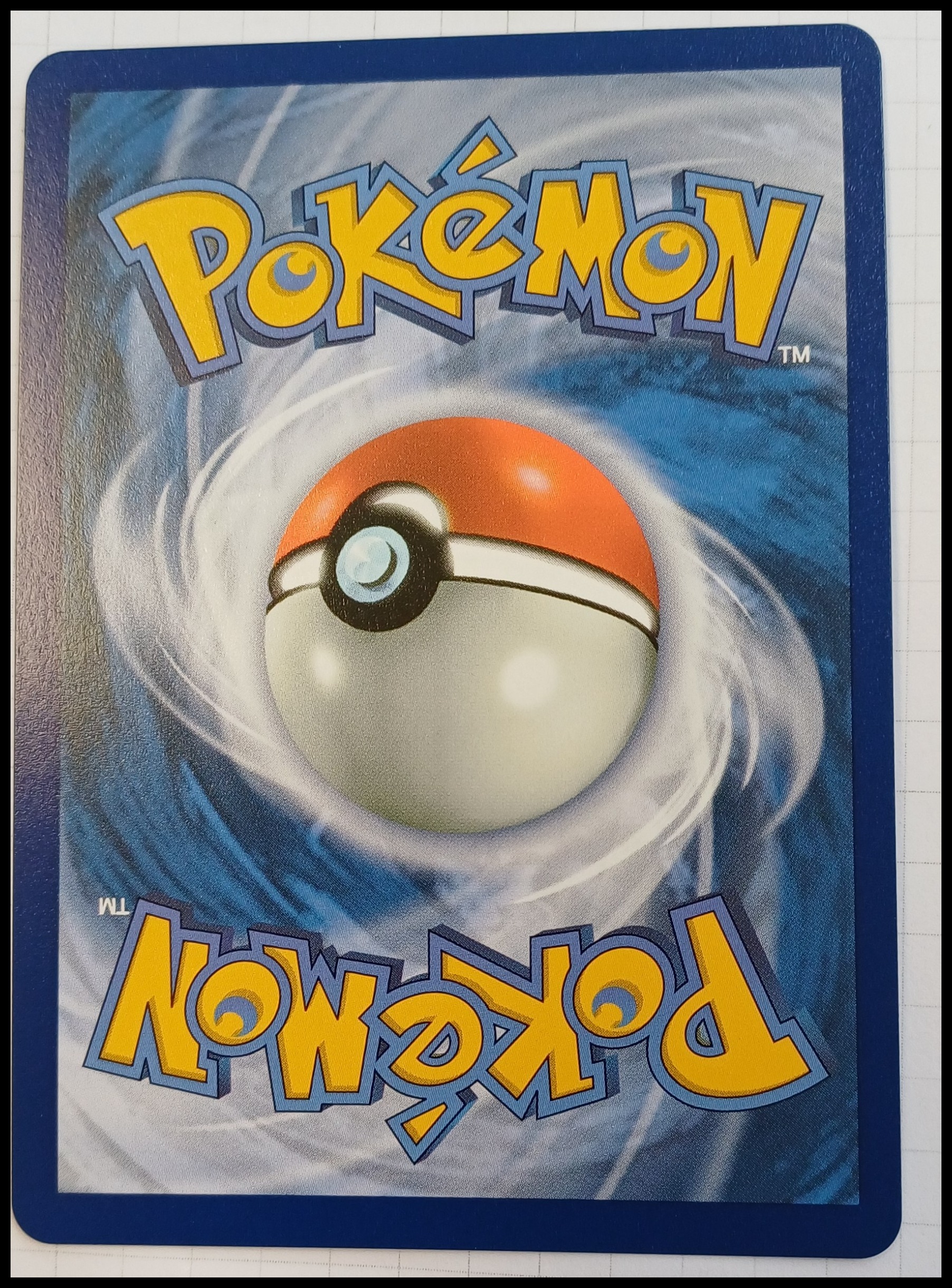
Authenticity. Verify the card stock, texture, and print quality against known genuine Pokémon full-art cards. Counterfeits often have incorrect font weight, muddy colors, flat texture, or poor holo treatment. Check the set symbol, numbering 098/094, and the English-language card text layout for consistency. Authentic modern Pokémon cards usually have crisp alignment, a clean factory cut, and the correct tactile finish on textured Illustration Rares.
Sources: youtube.com, monmouthcards.com, tcgplayer.com, papajoeys.com, misprint.com