Market outlook
Rising Outlook 7/10
The card's status as Luffy's true rookie and the first One Piece card ever made drives sustained collector interest. As grading populations remain tiny and high-grade copies are extremely rare, demand for pristine examples is expected to grow [1][3].
Next months. Next 3–6 months: Stable to slightly rising prices for high-grade copies; ungraded copies may remain flat due to abundant supply.
Long term. 1–3 years: Rising trend for gem-mint copies as their scarcity becomes more recognized; ungraded copies may see modest growth if the One Piece franchise continues to gain global popularity.
History
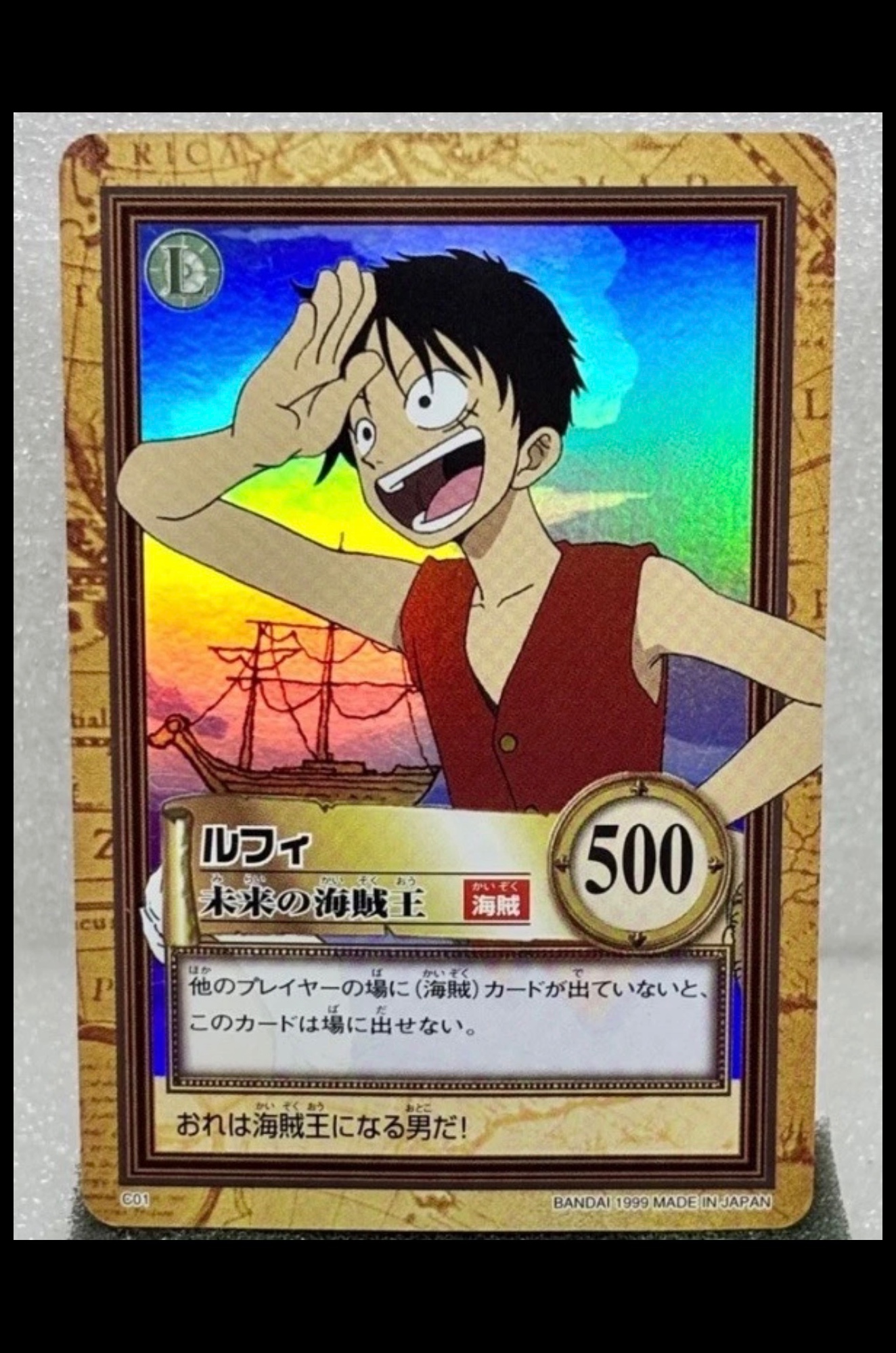
Monkey D. Luffy is the protagonist of the One Piece manga and anime series, a pirate who aims to become the Pirate King by finding the legendary treasure One Piece. He is the captain of the Straw Hat Pirates and is defined by his incredible strength, boundless optimism, and unwavering loyalty to his friends. This card is his true rookie trading card, marking his first official appearance in a trading card format, released in the very first year of the One Piece franchise (1999), making it historically significant as the earliest officially released Luffy card by definition [1][3].
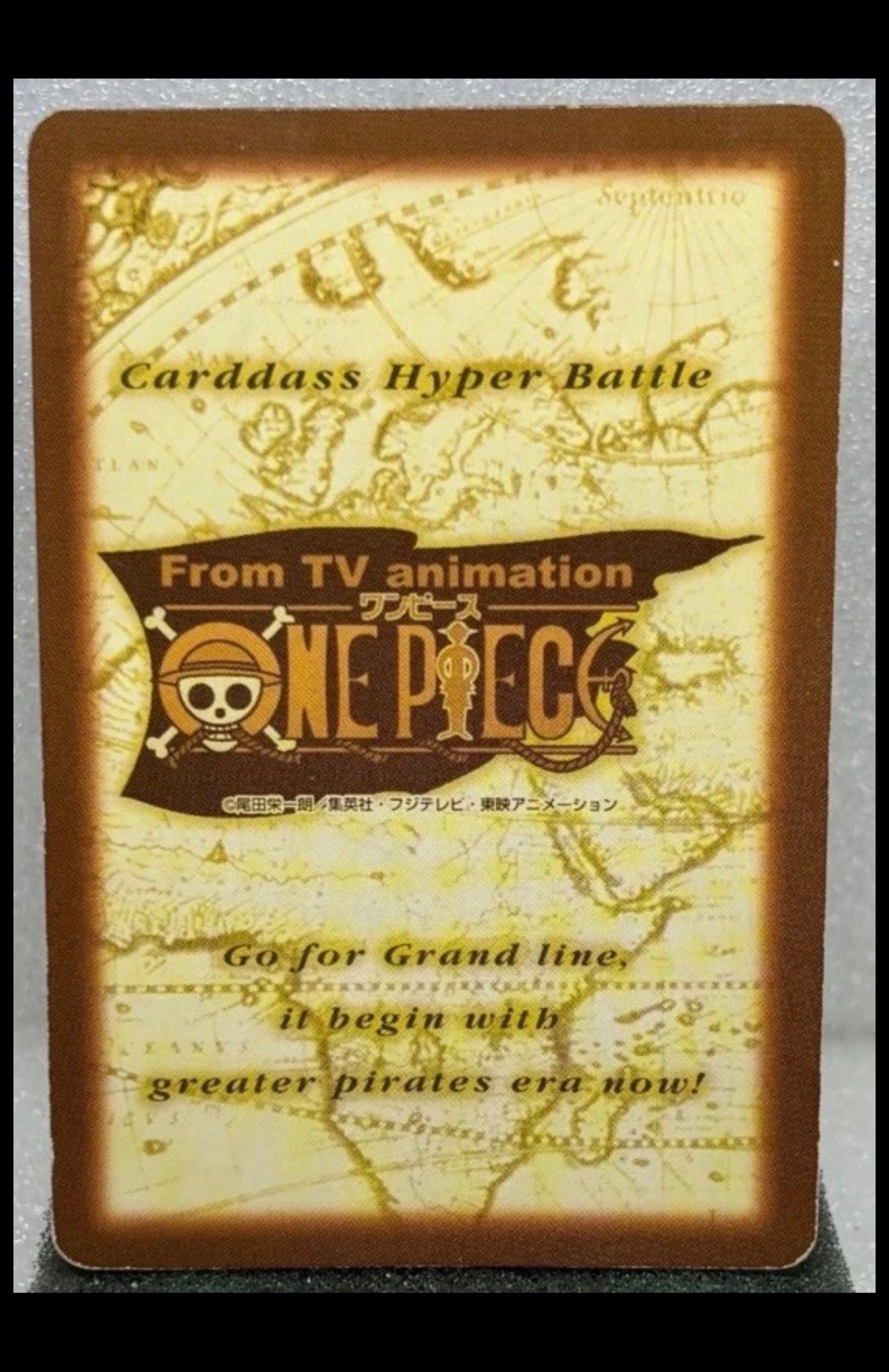
This card was first released in November 1999 in Japan as part of the Bandai 'Carddass Hyper Battle - First Stage' set, making it the very first One Piece card ever produced and Luffy's first official trading card [1][3][8].
- It is Luffy's true rookie card and the first ever One Piece trading card, produced by Bandai in 1999 [1][3]
- Gem-mint (graded 10) copies are extremely rare, with a graded population of only four and a gem-mint rate below 10% [1][3]
- The card was heavily played and traded when new, so very few survived without edge wear, scratches, or surface marks, making high-condition copies exceptionally scarce [1]
Rarity and print run
- Tier
- Common
- Print run
- Very High
- First printed in
- Carddass Hyper Battle - First Stage (One Piece Carddass Hyper Battle Hyper Battle First Stage)
- Demand
- High
- Supply
- Abundant
- Originally a common card with a very high print run, but gem-mint copies are extremely scarce due to heavy play and poor survival rates [1]
- Only four graded 10 copies exist, with a gem-mint rate below 10% [3]
- Hoards of ungraded copies are abundant, but high-grade examples are rare
Collector notes
Condition. Key flaws to check include edge wear, corner dings, surface scratches, and foil wear. Because the card was heavily played in 1999, most copies show significant wear; gem-mint copies are extremely rare. The foil layer may be scratched or flaked, and the card's surface may have dull spots [1].
Storage. Store in a hard plastic top loader or a magnetic one-touch case, and keep in a cool, dry environment away from direct sunlight. Use a protective sleeve inside the loader to prevent micro-scratches. For long-term preservation, consider grading through graded or graded, especially if the card is in high condition [1].
Authenticity. Fakes are now available; authentic cards have a vibrant, shiny foil with sharp, clear text and rich color. Reprints or fakes often have dull, faded colors, less reflective foil, and blurry or indistinct text. Compare the original's foil brightness and text clarity to known authentic examples to spot fakes [1][2].