Market outlook
Stable Outlook 7/10
The market trend is stable because the card is a Common rarity with abundant supply, but high demand for top-grade (graded 9) vintage copies from 1999 keeps prices consistent around $750-$850, though the $3,500 listing suggests potential for outlier spikes if demand surges for Nami specifically[1][2][4].
Next months. Next 3-6 months prediction: Prices will likely remain stable around $750-$850 for graded 9 copies, with occasional spikes if high-grade listings appear
Long term. 1-3 year prediction: Stable to slight increase due to the growing collector base for vintage One Piece cards, especially for top-grade copies from the 1999 First Stage set
History
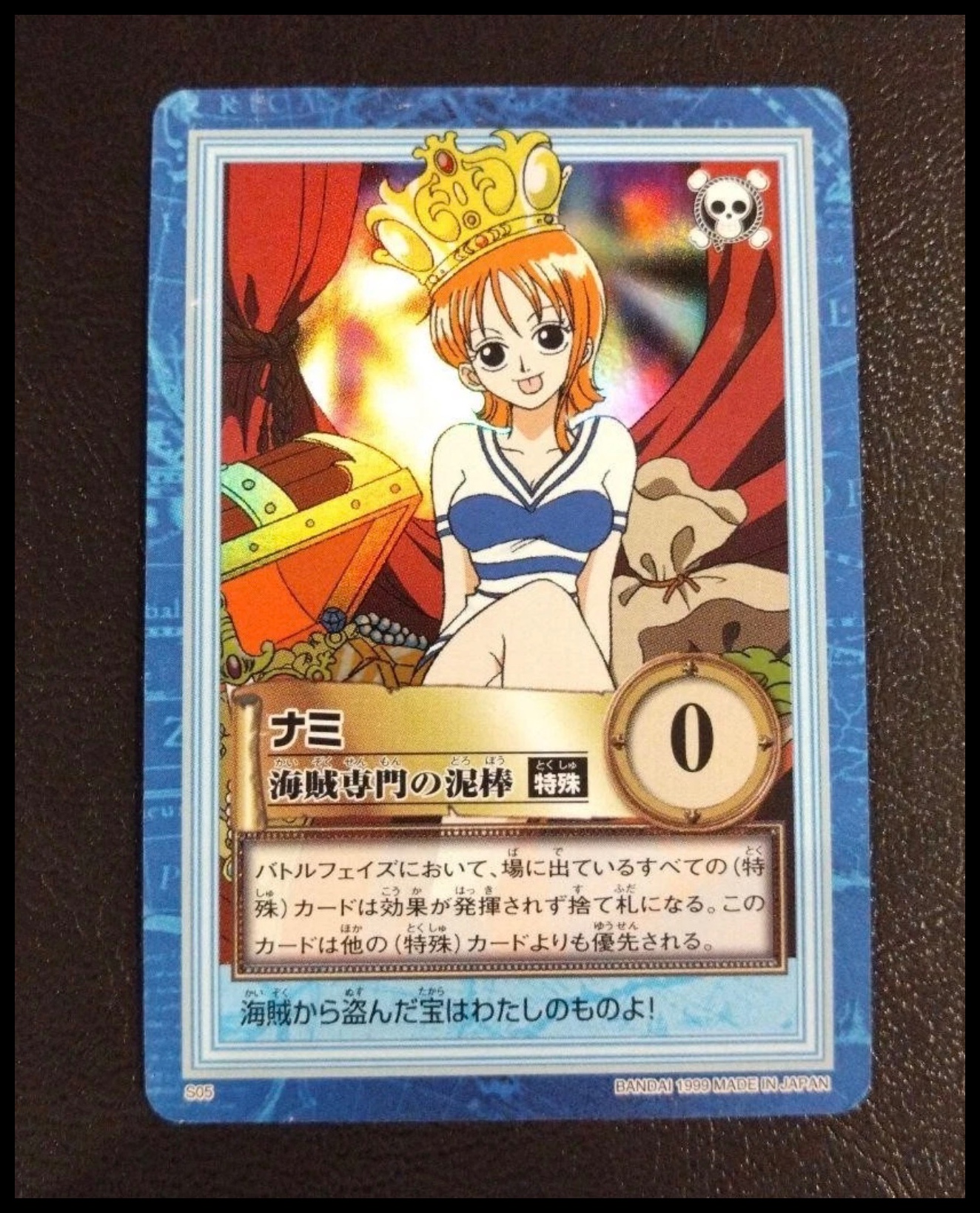
Nami is the navigator of the Straw Hat Pirates in the anime and manga series One Piece. Originally the 'Cat Burglar' of Orange Town, she fought the pirate Buggy before joining the crew. Her significance stems from her strategic mind, loyalty to the crew, and her complex backstory involving the destruction of her hometown and the death of her friend Bell-mère.
This card was first released in November 1999 in Japan as part of the One Piece Carddass Hyper Battle First Stage set, shortly after the anime aired for the first time and capturing moments from the Romance Dawn and Orange Town arcs[3][5].
- Released only a few months after the One Piece anime premiered in 1999[3].
- Captures early story arcs including Romance Dawn and Orange Town[3].
- Part of the foundational First Stage set of the Hyper Battle series, which ran from 1999 to 2002[5].
Rarity and print run
- Tier
- Common
- Print run
- Very High
- First printed in
- One Piece Carddass Hyper Battle First Stage
- Demand
- High
- Supply
- Abundant
- The card is a Common rarity, meaning it was printed in very high quantities relative to the set size
- As part of the First Stage (1999) set, it is vintage and has a finite condition population, especially for graded 9 grades
- Nami's character popularity drives demand despite the Common rarity
Collector notes
Condition. Key things to check include centering, edge wear, and surface scratches. Common flaws for this vintage card include creasing, corner dings, and print defects like misalignment or ink smudges due to the 1999 printing process[1][2].
Storage. Store the card in a rigid, non-PVC plastic sleeve or a hard top loader. Keep it in a climate-controlled environment away from direct sunlight and humidity to prevent fading or warping[1].
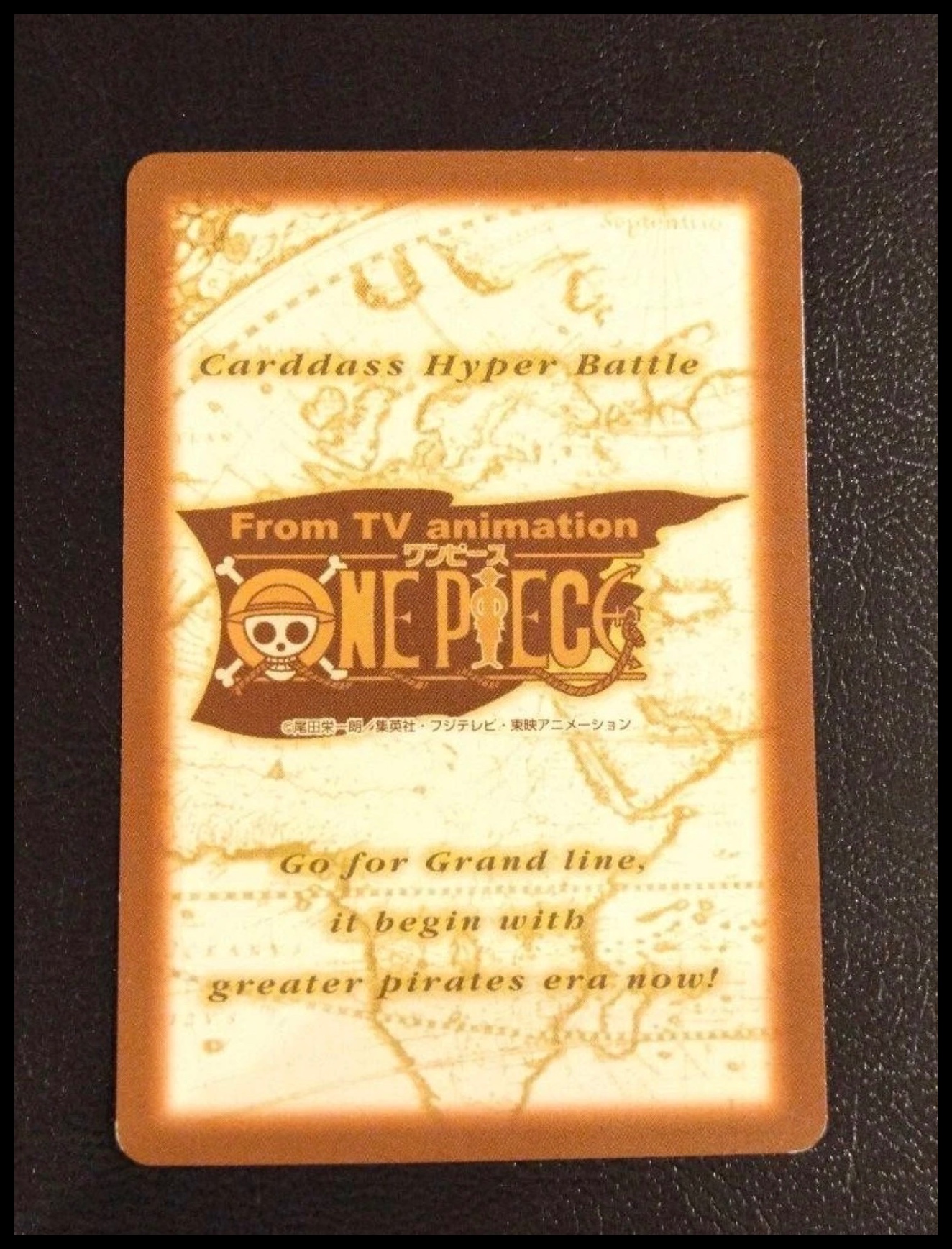
Authenticity. To spot fakes, verify the card stock texture and print quality; authentic 1999 copies have a specific matte finish and slight imperfections. Reprints often have sharper, newer printing. Look for the 'Carddass' logo and the specific set number S05 printed clearly[1]. Authentication by graded is recommended for high-value copies, as evidenced by the graded 9 graded versions in the market[1][2].
Sources: alt.xyz, warriorsdownunder.com, instagram.com, pricecharting.com, grandlinewiki.net