Market outlook
Rising Outlook 8/10
One Piece's enduring global popularity, combined with the card's out-of-print status and unique finish, drives increasing demand. High-grade graded copies have shown exponential value growth, indicating strong market confidence.
Next months. Next 3–6 months: Prices for ungraded copies may rise 10–20% as collectors seek foundational One Piece cards.
Long term. 1–3 years: graded9 graded copies could reach 1.5–2 million yen, with ungraded copies stabilizing at 100,000–200,000 yen as demand outpaces supply.
History
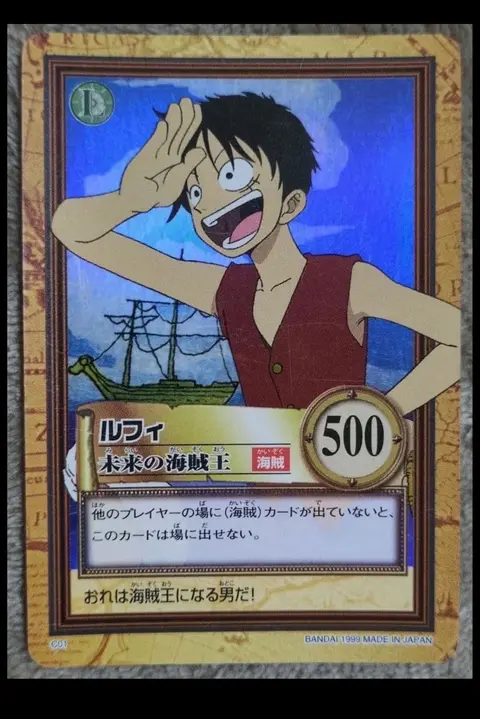
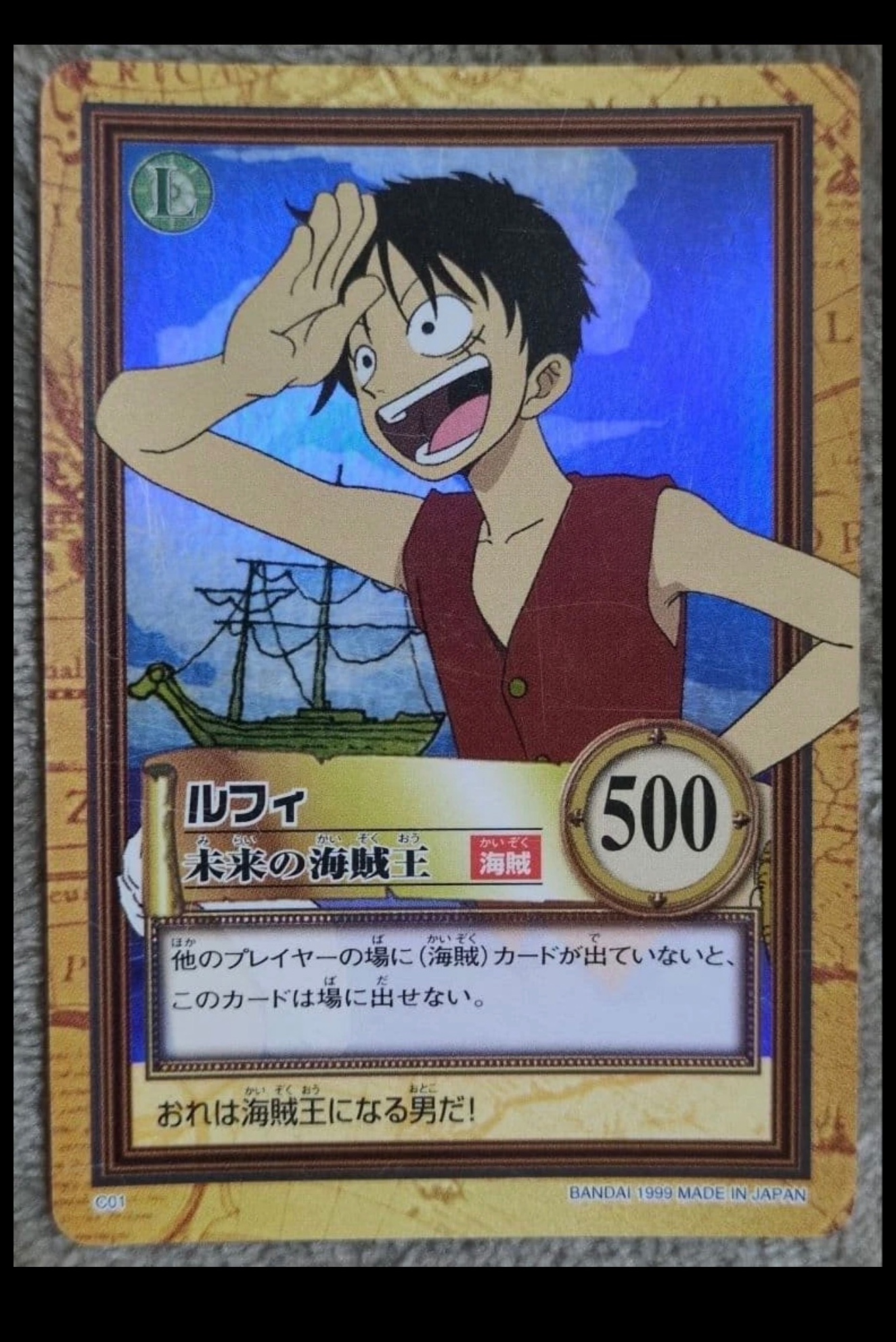
Luffy is the main protagonist of the One Piece anime and manga series, created by Eiichiro Oda. He aspires to become the King of the Pirates by finding the legendary treasure 'One Piece'. His iconic goal is summarized in the card's title 'Future Pirate King', reflecting his destiny to lead the pirate world. This character became globally influential after the series' debut in 1997, with the anime starting in 1999, making this 1999 card a foundational piece of One Piece trading card history.
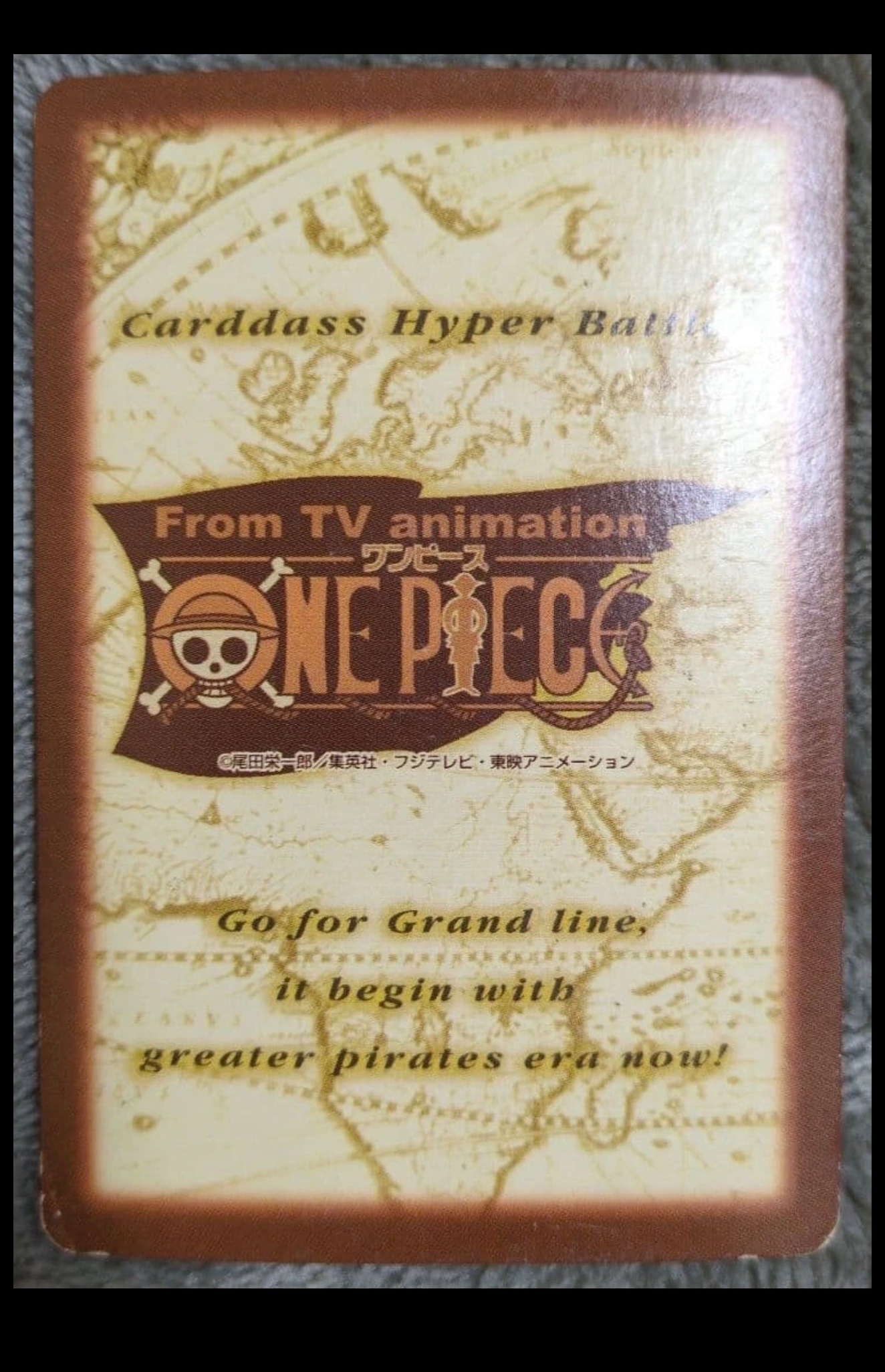
This card was first released in 1999 in Japan as part of Bandai's 'Carddas One Piece Hyper Battle' series. It is one of the earliest One Piece trading cards, produced during the anime's premiere year, making it a collector's item from the franchise's inception.
- The card features a 'Kirara' (glitter) finish, making it a 'Kira Card' variant, which is rare for 1999 trading cards.
- It is currently out of print (絶版), increasing its scarcity and collector value.
- A graded9 graded copy sold for 1,150,000 yen in 2026, indicating extreme value for high-grade specimens.
Rarity and print run
- Tier
- Common
- Print run
- Medium
- First printed in
- Carddas One Piece Hyper Battle
- Demand
- High
- Supply
- Scarce
- Out of print (絶版) since 1999, limiting available copies.
- Unique 'Kirara' glitter finish not common in 1990s trading cards.
- Early release during anime premiere, making it a foundational One Piece card.
Collector notes
Condition. Key flaws to check include vertical lines on the surface (possibly manufacturing-related), edge wear, and centering. The glitter finish is prone to micro-scratches that reduce value. Ungraded copies often show surface imperfections, as noted in a 2026 listing with a visible vertical line.
Storage. Store in a rigid card case to prevent bending or creasing. Use a UV-protective sleeve and keep in a climate-controlled environment away from humidity. For long-term preservation, place in a sealed Mylar bag with silica gel to prevent moisture damage.
Authenticity. Fakes may lack the authentic glitter 'Kirara' finish or have incorrect Bandai branding. Verify the card number 'C01' and the '1999' print year. Authentic copies have a specific holographic pattern under light. Reprints may be smoother or lack the textured glitter effect. Consult a professional authenticator for graded grading to confirm legitimacy.
Sources: paypayfleamarket.yahoo.co.jp, jp.mercari.com, suruga-ya.jp, search.kakaku.com