Market outlook
Rising Outlook 7/10
As a top-tier modern chase card featuring a fan-favorite Pokémon, Gengar VMAX benefits from sustained collector interest, strong nostalgia, and low gem-mint availability. Premium graded examples tend to hold value well, and market attention often returns to iconic alternate arts from Sword & Shield-era sets.
Next months. Likely to remain strong with occasional spikes from renewed set nostalgia, grading population updates, and high-profile sales.
Long term. Likely to appreciate gradually over 1-3 years, especially in graded 10 or equivalent top-grade copies, while raw and lower-grade copies may move more modestly.
History
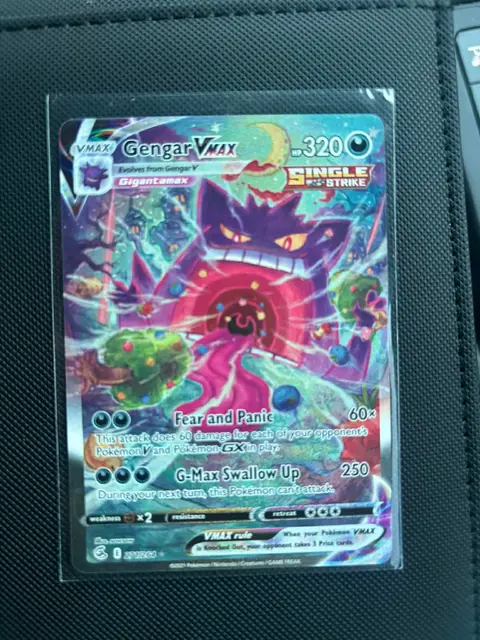
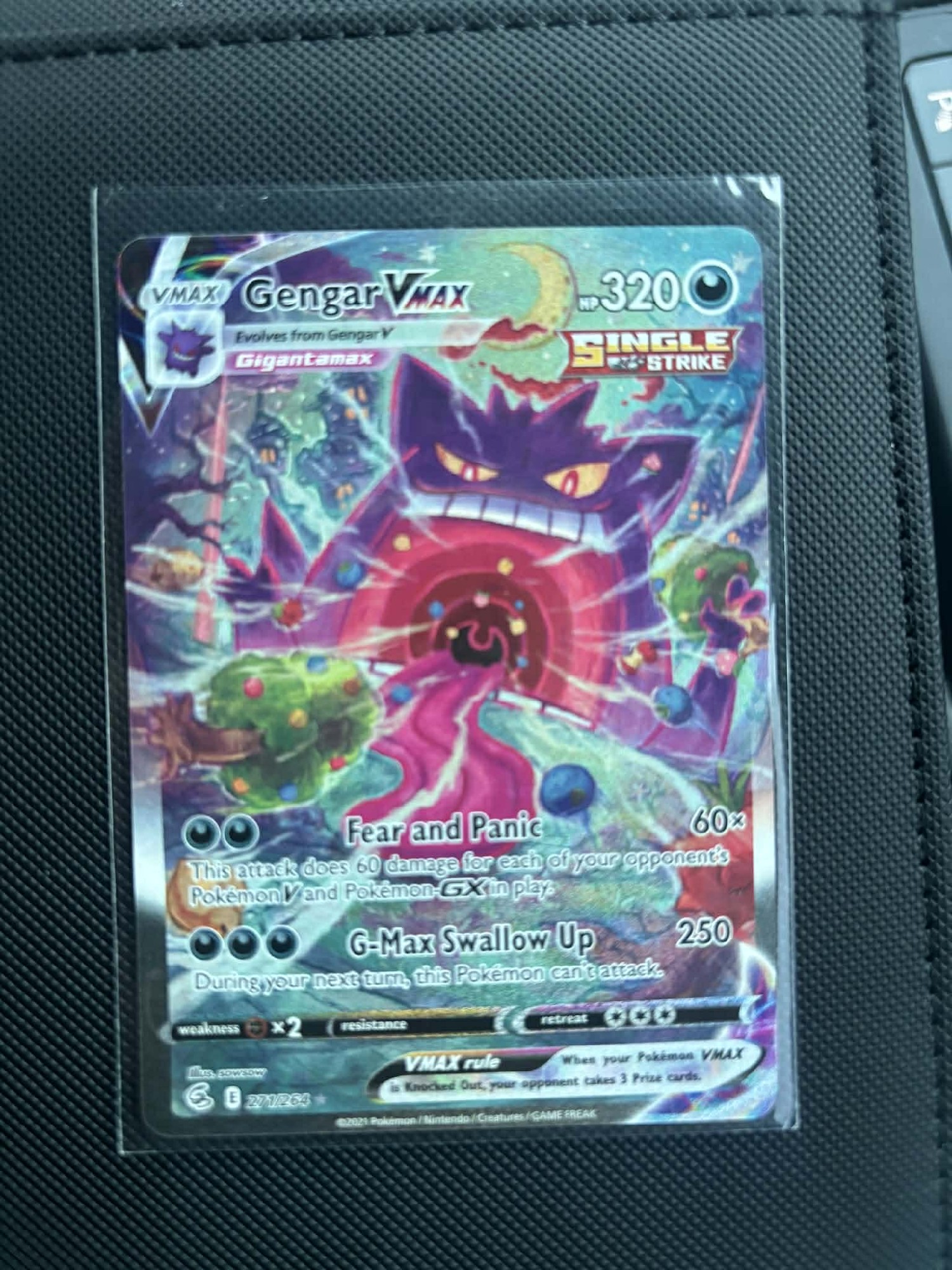
Gengar is a long-running Ghost-type Pokémon introduced in the original Pokémon Red and Green era, known as the evolved form of Haunter and one of the franchise’s most recognizable sinister mascots. Gengar VMAX depicts Gengar in its Gigantamax-inspired VMAX form from the Sword & Shield era, giving the character an oversized, highly stylized battle form that became especially popular with collectors because it combines classic nostalgia with modern full-art alternative illustration treatment.
First released in the English Sword & Shield—Fusion Strike expansion in 2021 as card 271/264, an Alternate Art Secret Rare. English release was in the standard Fusion Strike set product line beginning in November 2021.
- This is one of the most sought-after alternate art cards from Fusion Strike and is often considered the chase card of the set.
- It features artwork by sowwsow and is known for its highly dynamic, colorful, and surreal composition.
- The card is the Secret Rare alternate-art version of Gengar VMAX, not the regular VMAX print, which is why it carries number 271/264.
Rarity and print run
- Tier
- Secret Rare
- Print run
- High
- First printed in
- Sword & Shield—Fusion Strike
- Demand
- Very High
- Supply
- Medium
- Alternate Art Secret Rare treatment with much lower pull rates than standard VMAX cards.
- High collector demand for Gengar as a character and as an iconic Gen 1 Pokémon.
- Strong grading difficulty due to centering and edge wear on dark borders.
- Chase-card status from a popular modern set keeps well-kept copies in demand.
Collector notes
Condition. Check the very dark borders for whitening, especially on corners and edges, since wear is easier to spot on black/dark-card frames. Inspect the holo surface for scratches, print lines, roller marks, and surface scuffs under angled light. Alternate arts also often suffer from centering issues, so left-right and top-bottom centering matter heavily for graded/graded/graded grading. Look carefully for corner dings from packaging and binder wear.
Storage. Store in a penny sleeve plus semi-rigid or top-loader, then keep in a cool, dry place away from direct light. For high-value copies, use fresh sleeves and a card saver for submission or a toploader with team bag for long-term storage. Avoid stacking heavy items on top of the card and minimize handling without clean, dry hands or gloves.
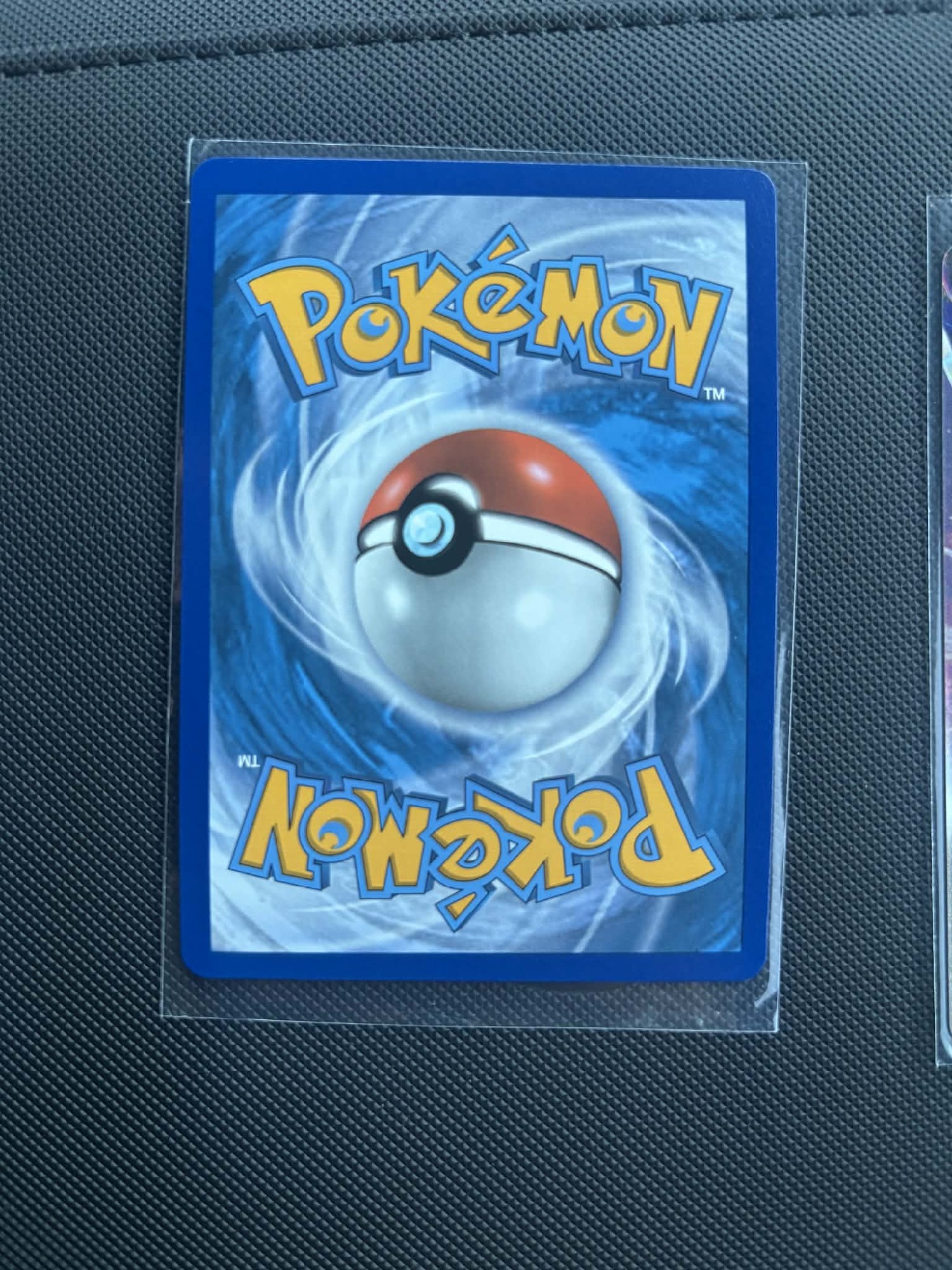
Authenticity. Authentic copies should have crisp texture on the full-art surface, correct font spacing, and consistent Pokémon TCG holofoil behavior. Counterfeits often show blurry text, washed-out color, incorrect texture pattern, or overly glossy surfaces. Compare the card’s texture and print clarity against verified images from TCGPlayer or major grading-reference images. For graded cards, verify label consistency and certification number with the grading company database.