Market outlook
Stable Outlook 7/10
Raw prices appear to be moving mostly sideways in the low-$20 range, while top-grade copies retain a strong premium. Demand is supported by set completion collectors and Legendary Pokémon fans rather than rapid speculative hype.
Next months. Expect raw prices to remain near current levels with modest fluctuations, while graded 10 and graded 9 copies should stay premium-priced.
Long term. Over 1-3 years, the card should remain a stable collector piece with gradual appreciation in top grades if gem-mint supply remains limited.
History
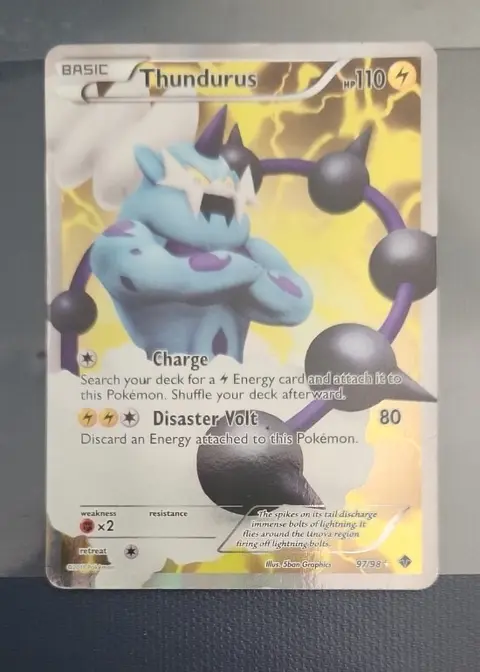
Thundurus is one of the Legendary Forces of Nature introduced in the Unova region of the Pokémon franchise, first appearing in the Generation V era as an Electric-type Legendary Pokémon associated with storms and thunder. In the Trading Card Game, its full-art appearance in Emerging Powers helped establish it as one of the standout chase cards of early Black & White era products.
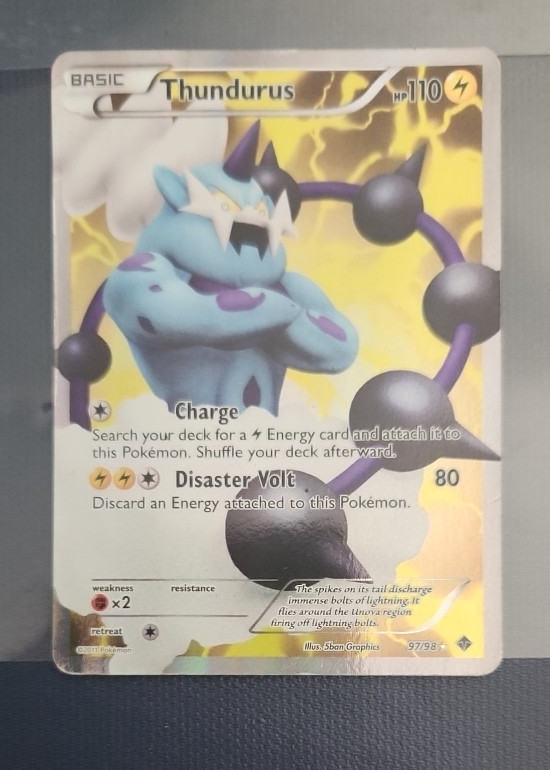
First released in the English Black & White: Emerging Powers expansion in 2011 as card 97/98, an Ultra Rare Full Art card.
- This is the Full Art Ultra Rare version of Thundurus from Emerging Powers, not a standard non-full-art rare.
- The card is the set’s #97/98, placing it among the top-numbered chase cards in the expansion.
- Modern market data shows a large spread between raw and graded 10 copies, indicating strong condition sensitivity and collector demand.
Rarity and print run
- Tier
- Ultra Rare
- Print run
- Medium
- First printed in
- Black & White: Emerging Powers
- Demand
- High
- Supply
- Medium
- Full-art Ultra Rare treatment makes it a chase card within the set.
- High-grade examples are scarce because white edging, surface wear, and centering issues are common.
- Collector interest is boosted by Thundurus being a prominent Legendary Pokémon from the Black & White era.
Collector notes
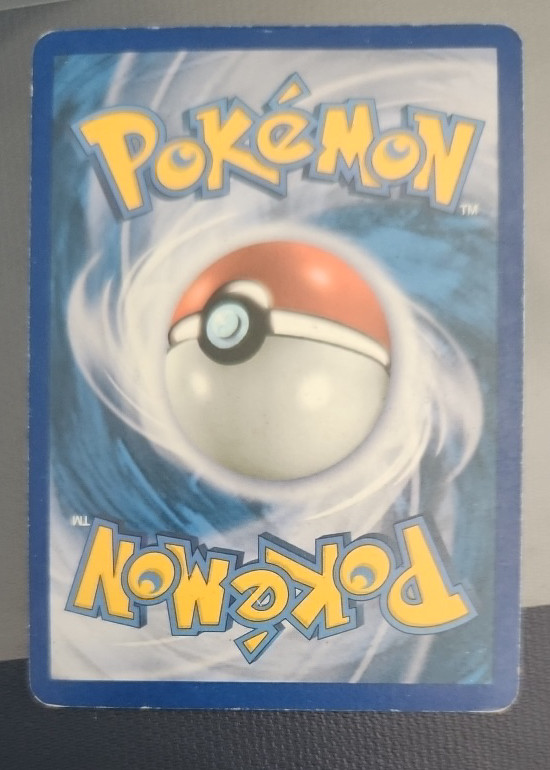
Condition. Check for whitening on the black borders, edge wear, surface scratches on the holo/full-art finish, corner dings, print lines, and centering. Full-art cards from this era also commonly show scuffing and binder wear along the edges and back.
Storage. Store in a soft sleeve and rigid top loader or one-touch case, keep away from humidity and direct light, and avoid friction against other cards. For long-term preservation, use an acid-free sleeve and a climate-stable box or graded slab for high-grade copies.
Authenticity. Authentic copies should have sharp print detail, proper texture/foil behavior for the era, and consistent card stock thickness. Counterfeits often show washed-out color, incorrect border tone, poor texture, blurry text, and unnatural gloss or alignment. Compare font, set symbol placement, and holo pattern carefully against known genuine examples.
Sources: pricecharting.com, tcgrate.com, cardprice.com, thelabtcg.com, mydextcg.com