Market outlook
Stable Outlook 7/10
The card has established collector demand and a mature market price structure. Without a major new catalyst, prices usually move within a narrow band, with premiums driven mainly by grade, language, and specific variant details.
Next months. Expected to remain mostly stable with modest fluctuations in graded-card pricing and continued interest in high-grade copies.
Long term. Likely to hold value well over 1-3 years, with gradual appreciation for gem-mint copies and clean, correctly identified regional or commemorative variants.
History
Mewtwo is a genetically engineered Psychic-type Pokémon created from Mew’s DNA in the original Pokémon storyline. It debuted as one of the franchise’s most iconic and powerful antagonistic creatures, known for its intelligence, telepathy, and unstable origins, which made it a recurring symbol of power, identity, and artificial life across games, anime, and cards.
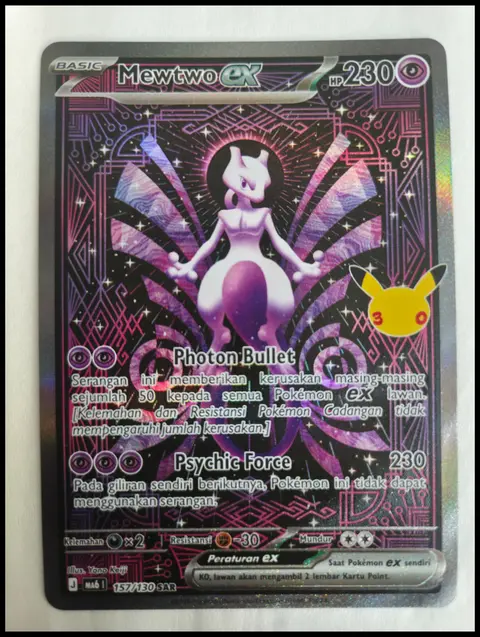
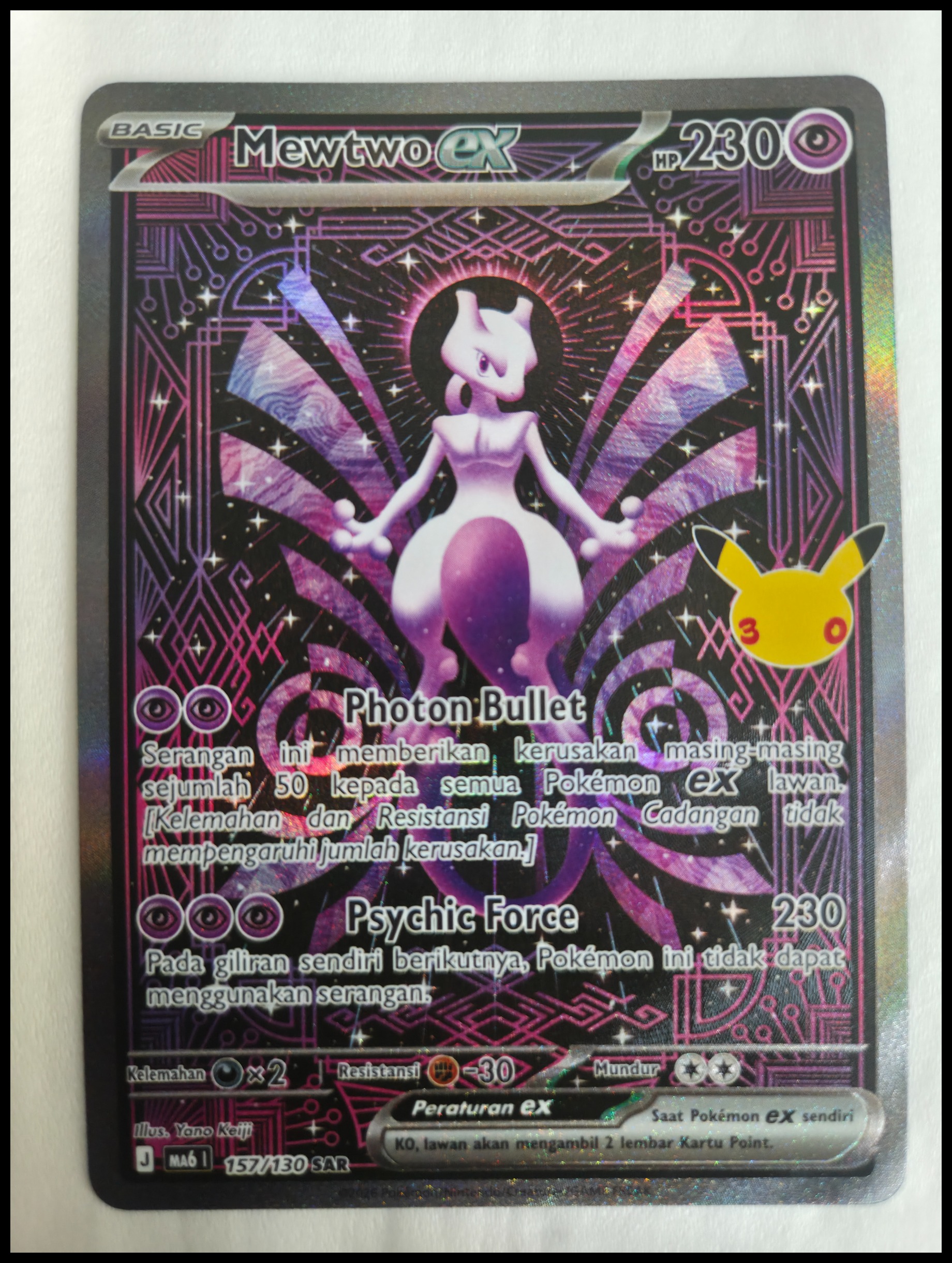
The card’s core artwork and identity trace back to Mewtwo ex from XY—BREAKthrough #157/162, first released in November 2015 in the XY: BREAKthrough expansion. The later Stellar Miracle/30th Celebration-style versions are variant printings or commemorative adaptations tied to the same card concept.
- Mewtwo ex #157 is an Ultra Rare Full Art card from BREAKthrough, originally released in 2015.
- Current market references for the original English printing place graded 10 copies in the low-thousands, showing strong collector demand.
- The card name and numbering have been reused or mirrored in later special releases and regional printings, which makes exact set/variant identification important.
Rarity and print run
- Tier
- Ultra Rare
- Print run
- Medium
- First printed in
- XY - BREAKthrough
- Demand
- High
- Supply
- Medium
- Full-art high-rarity treatment increases desirability.
- graded 10 copies command a large premium due to grading difficulty and collector demand.
- Character popularity keeps demand elevated across regions and languages.
- Later commemorative/regional variants can create confusion, but also increase chase interest.
Collector notes
Condition. Check for edge whitening, corner wear, surface scratching on the full-art holo, print lines, centering, and any whitening or pressure marks on the back. Full-art cards often show visible sleeve scuffing and foil scratching under light.
Storage. Store in a penny sleeve and rigid top loader or semi-rigid holder, keep away from humidity and sunlight, and avoid friction on the holo surface. For higher-value copies, use a graded sleeve or sealed protective case after authentication.
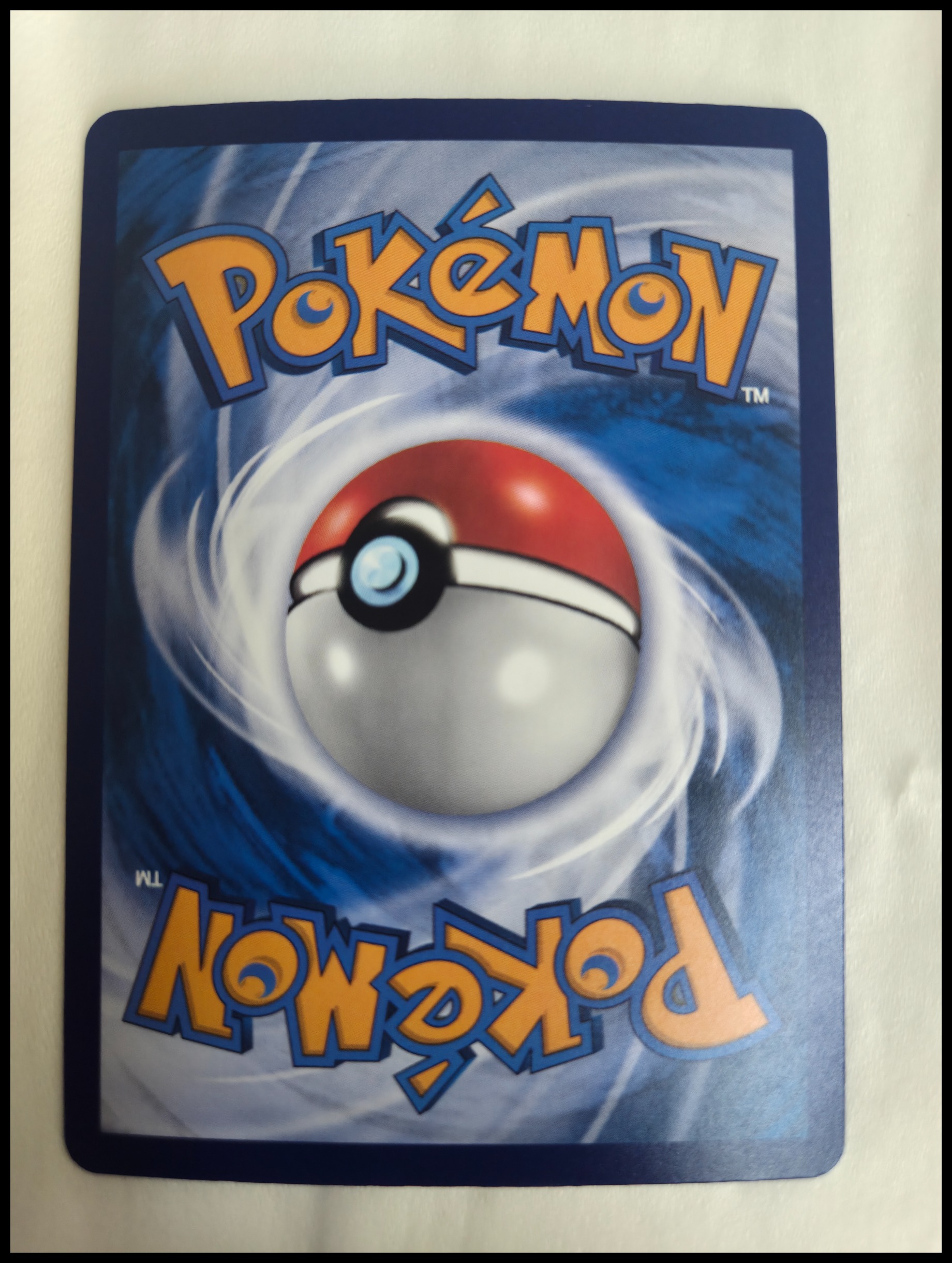
Authenticity. Verify correct texture, font sharpness, and holo pattern consistency; counterfeit full-art cards often have flat texture, washed colors, or incorrect back coloration. Compare set symbols, numbering, and language-specific text carefully, since later commemorative or regional variants can be confused with the original printing.
Sources: pricecharting.com, cardrake.com, pokeprices.io, pokemonwizard.com, chaseseason.com