Market outlook
Stable Outlook 7/10
Demand for Mew remains strong and the card has established itself as a flagship Paldean Fates chase, but modern print volume and ongoing grading supply keep appreciation gradual rather than explosive.
Next months. Likely to trade in a relatively tight range, with graded 10 and gem-mint premiums moving based on hype, sealed-product openings, and grading population updates.
Long term. Over 1-3 years, it has a good chance of holding value or appreciating modestly if shiny Mew remains a top modern chase, but gains will likely be slower than scarcer vintage or lower-population special art cards.
History
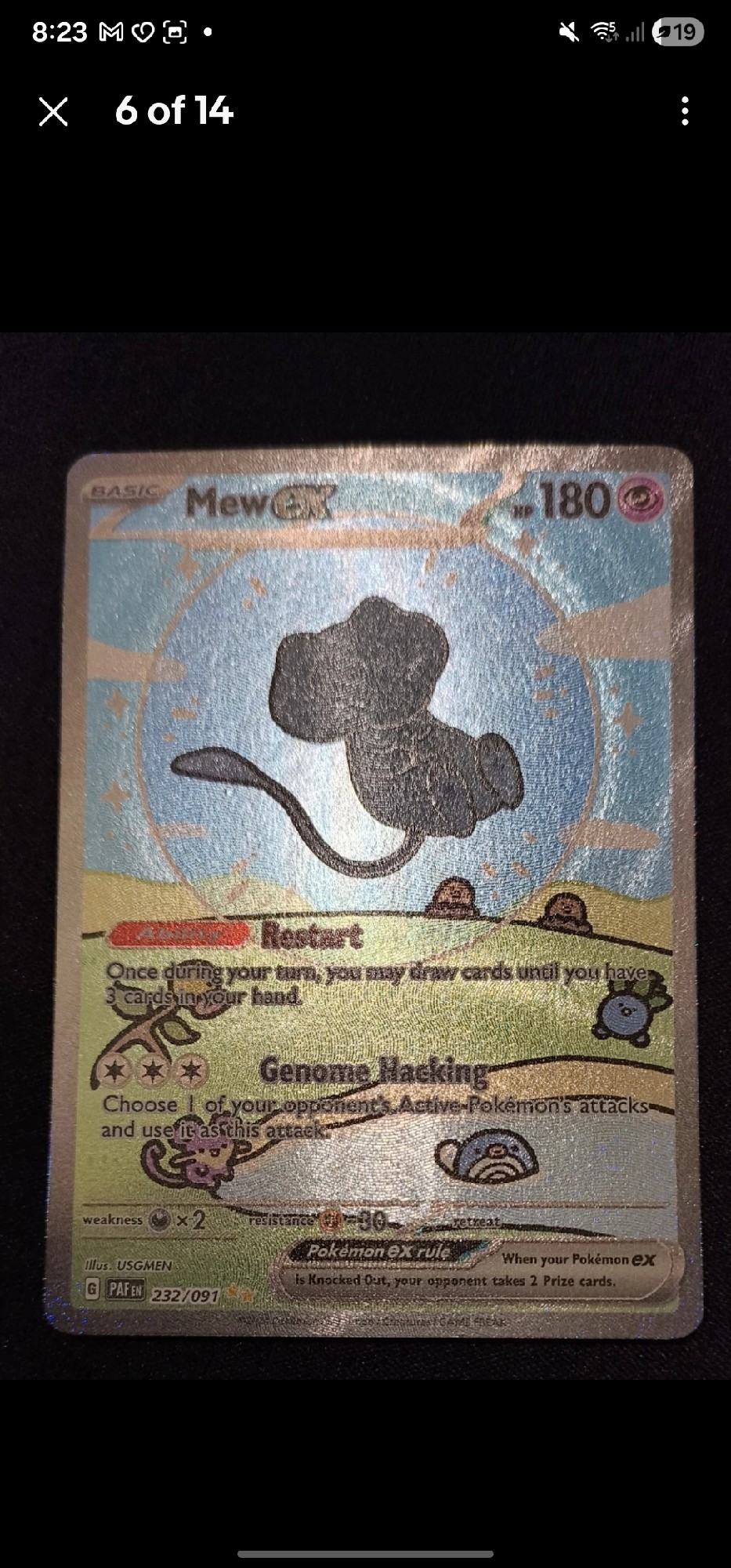
Mew is a legendary Mythical Pokémon introduced in Generation I, originally associated with rarity, mystery, and the lore of the first Pokémon games. In the trading card game, Mew has long been a highly collectible character because of its popularity, limited availability in special cards, and frequent association with premium art treatments. The Paldean Fates Mew ex special illustration rare continues that tradition, presenting Mew in a playful, highly detailed scene that became one of the defining chase cards of the set.
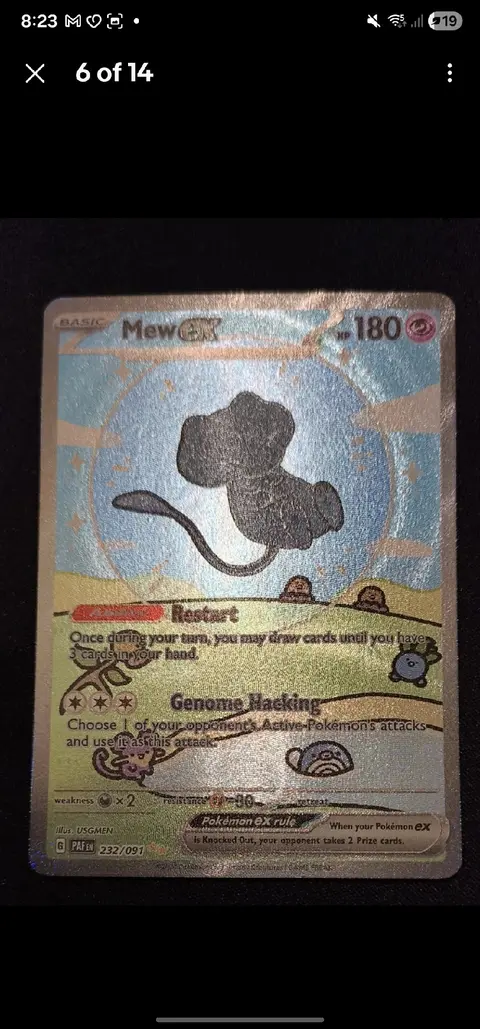
First released in English in Scarlet & Violet: Paldean Fates (2024) as card 232/091, a special illustration rare secret-style chase card in the set.
- This is one of the key chase cards from Paldean Fates, alongside Charizard ex.
- It features the popular shiny Mew theme, which significantly boosts collector demand.
- The card is an ex-era modern hit with premium full-art illustration treatment and strong sealed-product pull interest.
Rarity and print run
- Tier
- Secret Rare
- Print run
- High
- First printed in
- Scarlet & Violet: Paldean Fates
- Demand
- Very High
- Supply
- High
- Chase-card status within a popular modern set
- Special illustration rare artwork with broad appeal
- Higher pull difficulty than regular Ultra Rares
- graded 10 population and grading quality materially affect market value
Collector notes
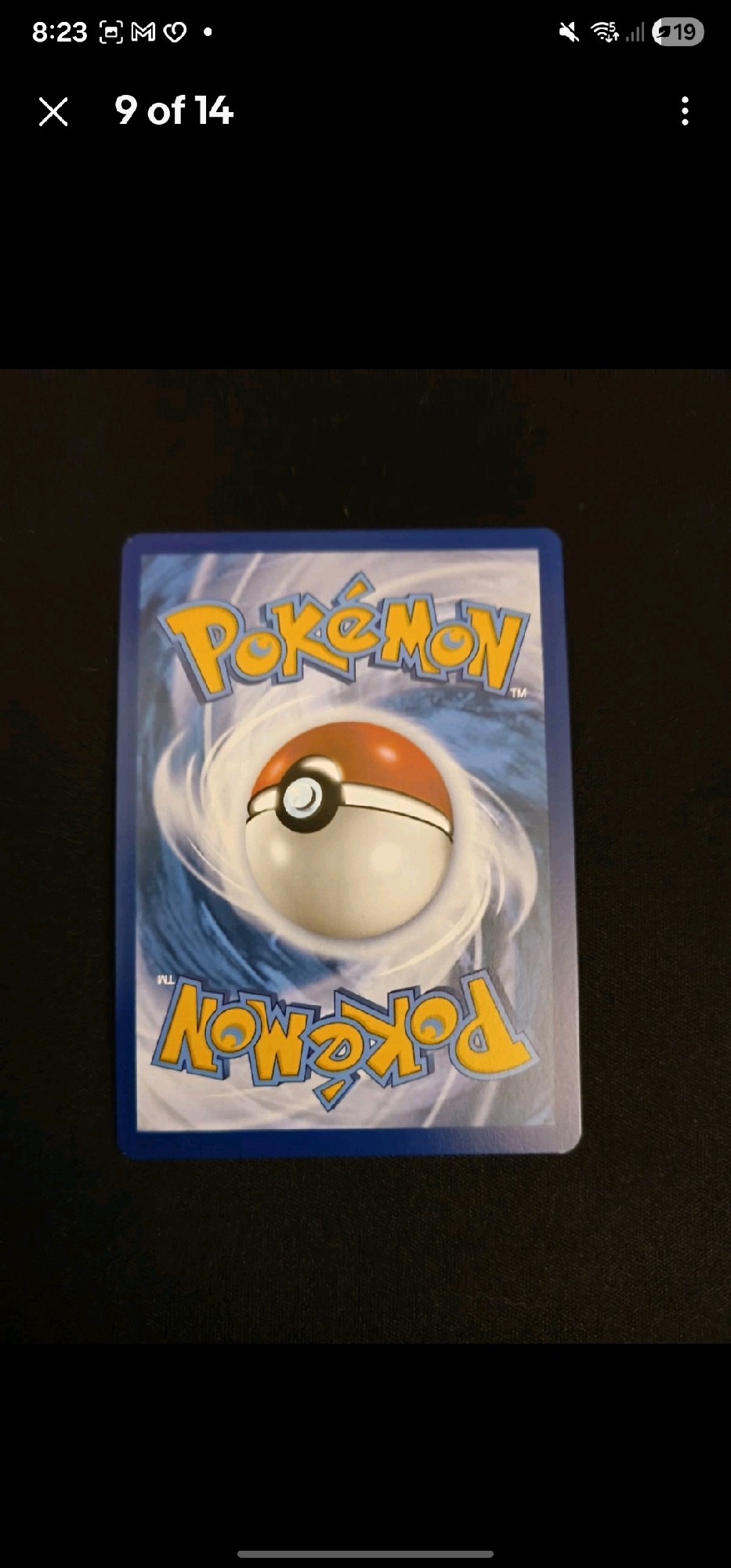
Condition. Check centering, especially left-right and top-bottom margins; surface print lines, scuffs, and holo scratches are common on modern full-art cards; inspect corners and edges for whitening from pack handling; verify texture consistency across the artwork and borders; look for factory roller marks or dimples on the reverse and front.
Storage. Use penny sleeves plus a tight-fitting top loader or semi-rigid holder immediately after opening; for long-term storage, keep in a cool, dry, dark environment with low humidity; avoid rubber bands, loose binder pockets, and direct sunlight; for graded candidates, handle only by edges and consider card savers for submission.
Authenticity. Authentic copies should have the correct Scarlet & Violet era font, texture, and print quality, with consistent foil and detailed illustration texture on the front; fake cards often show blurry text, incorrect coloration, flat or missing texture, poor gloss, or off proportions; compare the card number 232/091, set symbols, and attack/ability layout against official scans; modern fakes may mimic the texture but usually fail on edge finish, holo behavior, and card stock feel.
Sources: youtube.com, pricecharting.com, stockx.com, tcgplayer.com, cardmarket.com